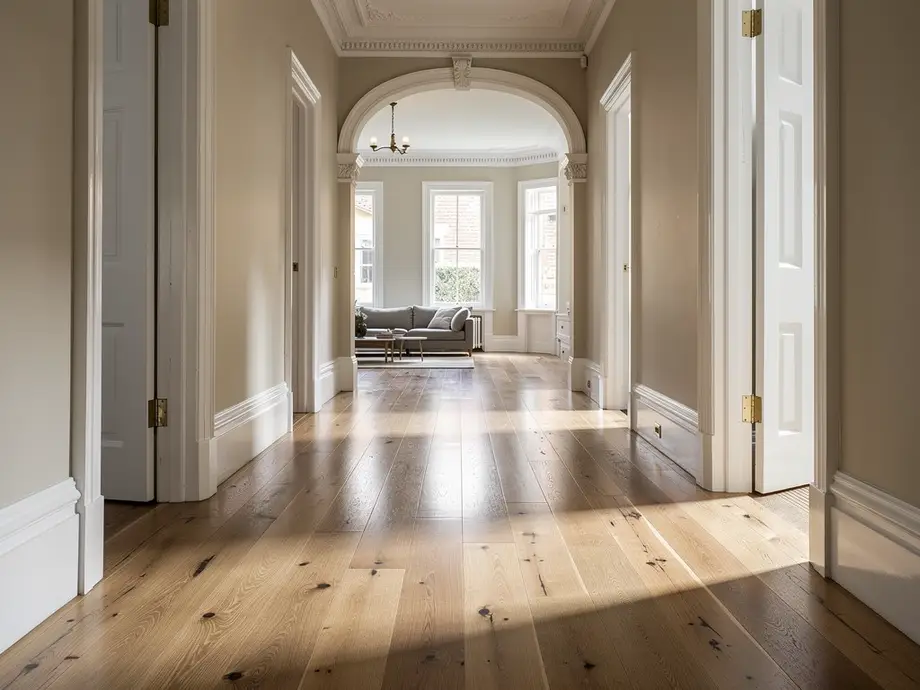
The floor for people who wanted timber
Printed floors got good, but they didn't become wood. Engineered timber is — the surface underfoot is millimetres of actual oak or Australian hardwood, which means grain that doesn't repeat, colour that deepens instead of dating, and a floor that takes on the life of the house. In Mosman and Willoughby living rooms, that's usually the brief in one sentence.
The engineering solves solid timber's old complaints: a plywood core keeps boards flat through humid summers and heated winters, allows wider boards than solid safely offers, and installs floating in days rather than the nail-sand-coat week of a traditional floor.
Honest limits
Engineered timber is still wood on top: it scratches like wood, fades a little in harsh sun like wood, and costs real money. Wet areas are out. If the room's job description is spills and scooters, hybrid will make you happier — we'll say so at the measure rather than sell you regret.
Matching and finishing
Half our engineered work touches existing timber — new boards meeting original 80mm hardwood at a doorway, or a whole-house refinish deciding between sanding the old and laying new. Colour-matching those transitions, machining thresholds, and scribing skirting back on is carpentry we keep in-house, and it's where this floor either looks built-in or bought.
Common questions
What is engineered timber flooring?
A board with a real hardwood surface — typically 3–6mm of oak, blackbutt or spotted gum — bonded to a stable plywood core. You get a genuine timber floor on top, with far better resistance to movement than solid boards, and it installs floating or glued.
Engineered vs solid timber — is engineered a compromise?
Not anymore. The wear surface is the same species you'd get in solid; the core is more stable through Sydney's humidity swings; and a 4–6mm wear layer can be sanded and refinished once or twice in its life. Solid boards still win for matching heritage floors — which is a job we also do.
Floating or glue-down — which installation is better?
Floating over underlay suits most rooms: faster, kinder to the budget, and easy to repair board by board. Glue-down earns its keep on stairs, herringbone and anywhere you want the most solid feel underfoot. The fixed written quote states which method we're pricing and why.
Can engineered floors be sanded back?
Yes — that's the point of paying for a real wear layer. A 4mm+ surface takes one to two careful refinishes, which means the scratch years of family life aren't the end of the floor.
Which looks suit North Shore homes?
European oak in natural and smoked tones carries the modern renovations; blackbutt and spotted gum sit naturally in homes with Australian hardwood detailing. We bring large samples — engineered boards vary too much between brands to choose from a website.